

Integrate on-site
Integrate Gocertify by adding the Gocertify to your site’s<head> using either a tag manager (no developer needed) or manually pasting it in (basic HTML knowledge recommended). The setup takes less than 2 minutes!
Get your script from the dashboard
The easiest way to get your Gocertify script is from the Integrate on-site settings page in your dashboard. The script snippet is pre-configured with your brand identifier - just copy and paste it directly into your site.1
Navigate to the settings page
In your dashboard, go to Settings → Integrate on-site.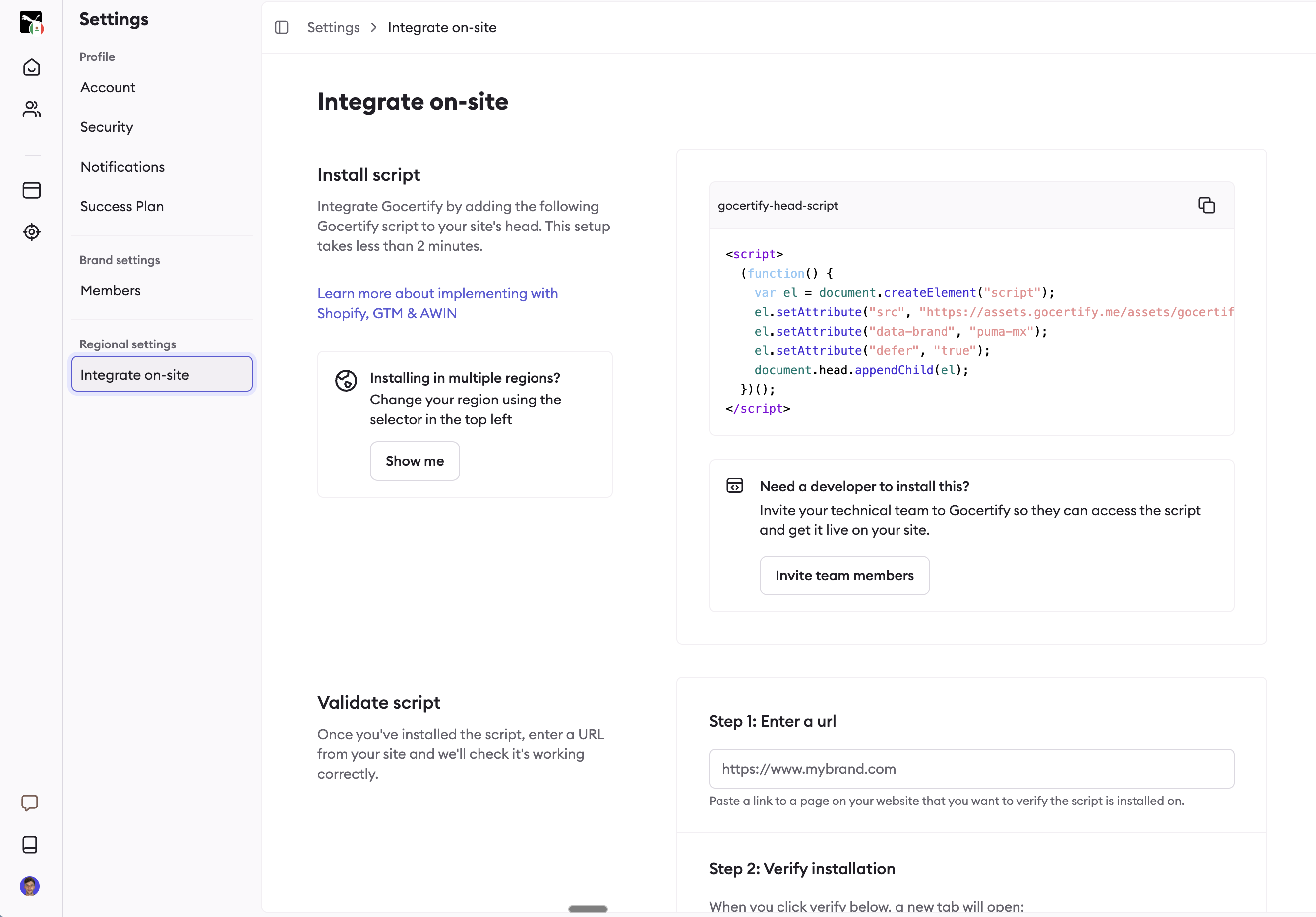
2
Copy the script
Click the copy icon next to the script snippet. Your brand identifier is already included, so no manual editing is required.
Installing in multiple regions? If you have access to multiple regions, you’ll see a hint card with a “Show me” button. Click it to open the region selector and switch to the correct region before copying the script—each region has a unique brand identifier.
3
Add to your site
Paste the script into your site using one of the installation methods listed in the installation methods section below.
Installation methods
You can use any one of the following methods to add the Gocertify script to your site. You only need to add the script once to your site. Pick your preferred method below and follow the steps.Pro tip: Get your script with your brand identifier pre-configured from the Integrate on-site settings page to avoid manual configuration errors.
Manually Add script to head
Manually Add script to head
Copy and paste the Gocertify script into the
<head> of your site. Remember to replace example-company with your actual company name.gocertify-script
Note: If you cannot add the script to the
<head> of your site you can place it in the <body> .Shopify
Shopify
1
Navigate to the Shopify app
Navigate to our Shopify app.
2
Install the app
Install the app by clicking 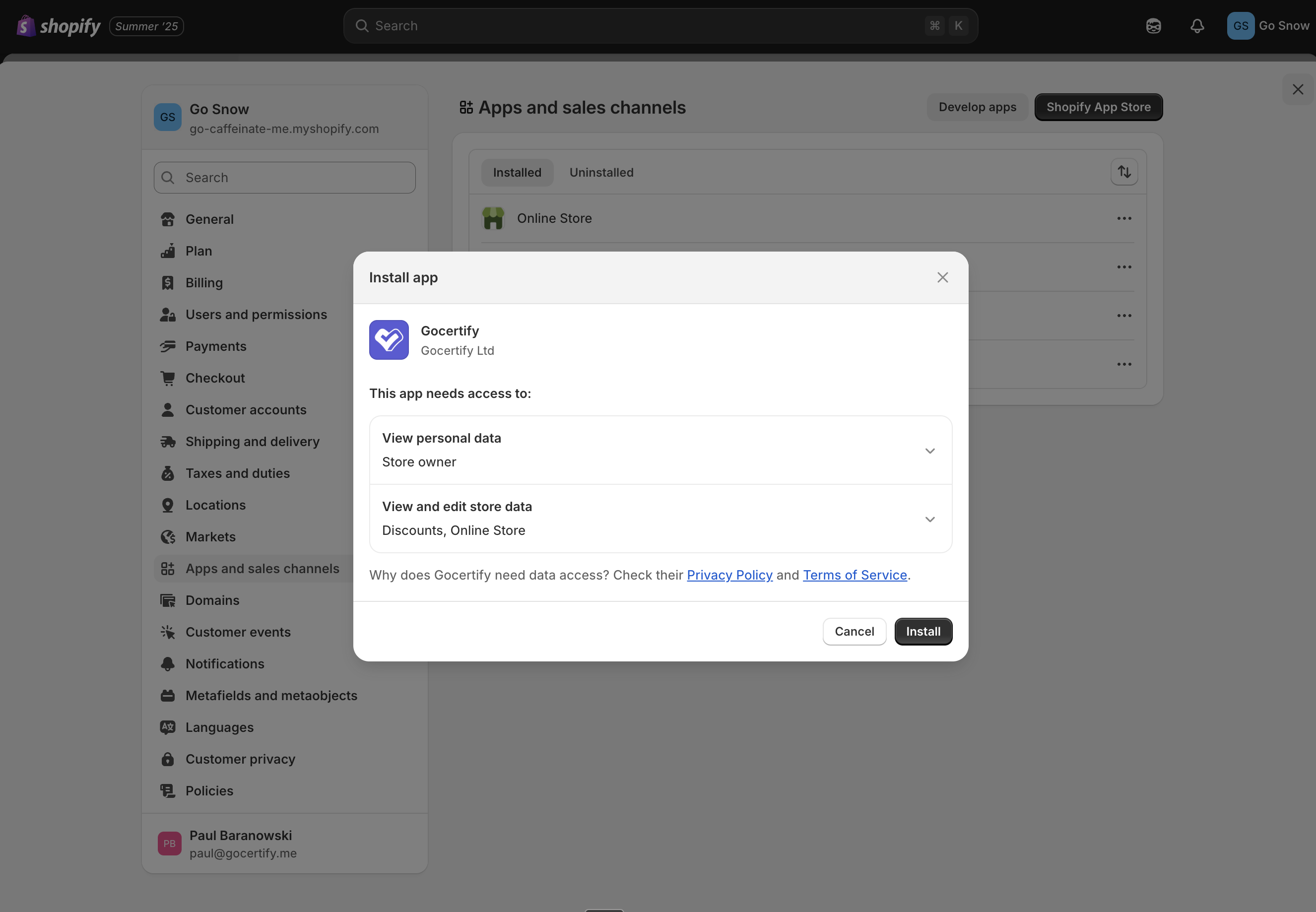
Install.3
Connect to your brand
Once installed, you will see the app appear in your left side menu. Click on the app and you will be asked to connect to your Gocertify brand by clicking 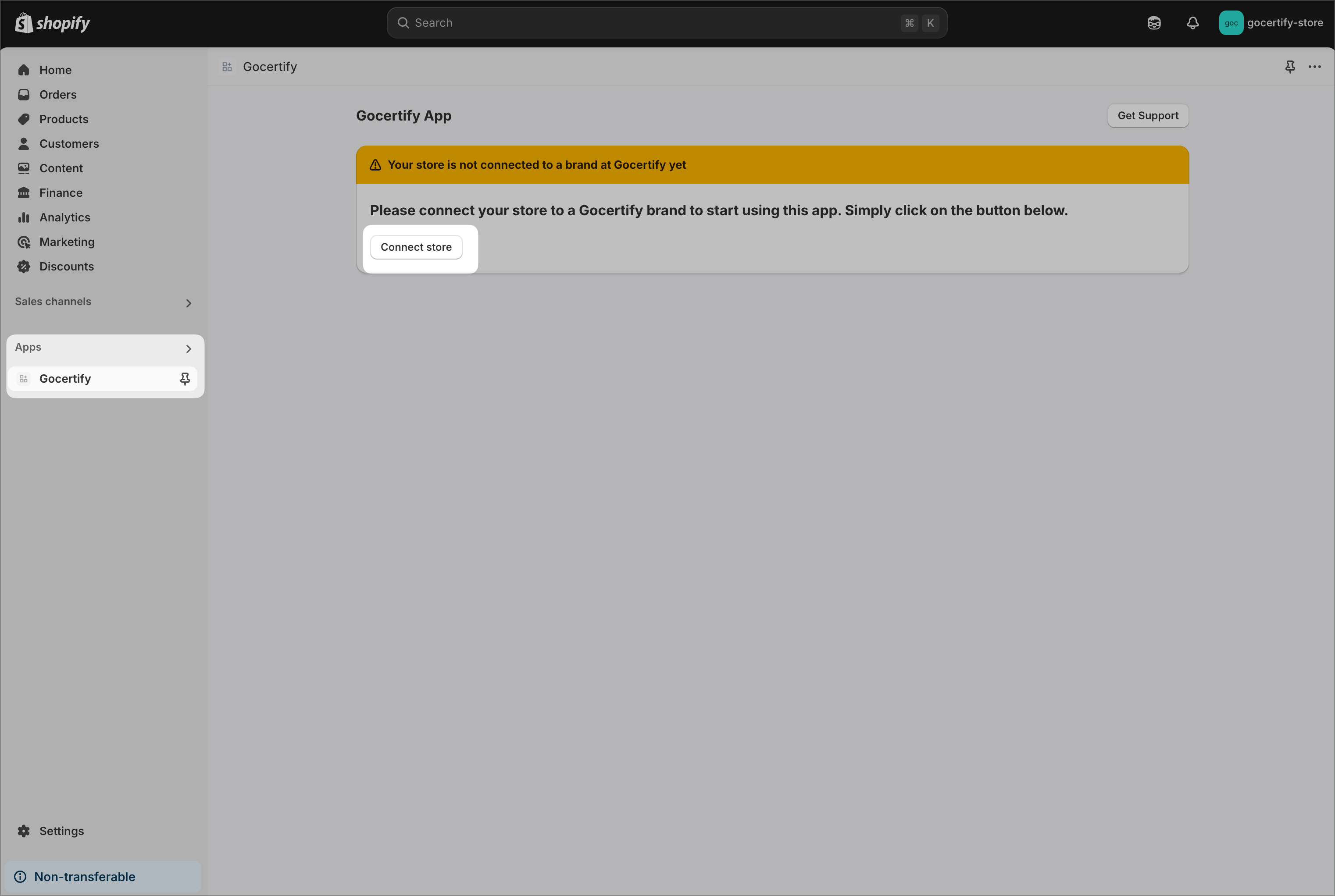
Connect.4
Select your brand
You will be presented with a list of brands you have access to. Select the brand you want to connect the app to. If you cannot see your brand, please contact your Gocertify account manager.
5
Navigate to the embed page
Once successfully connected you will see a success message and a button asking you to 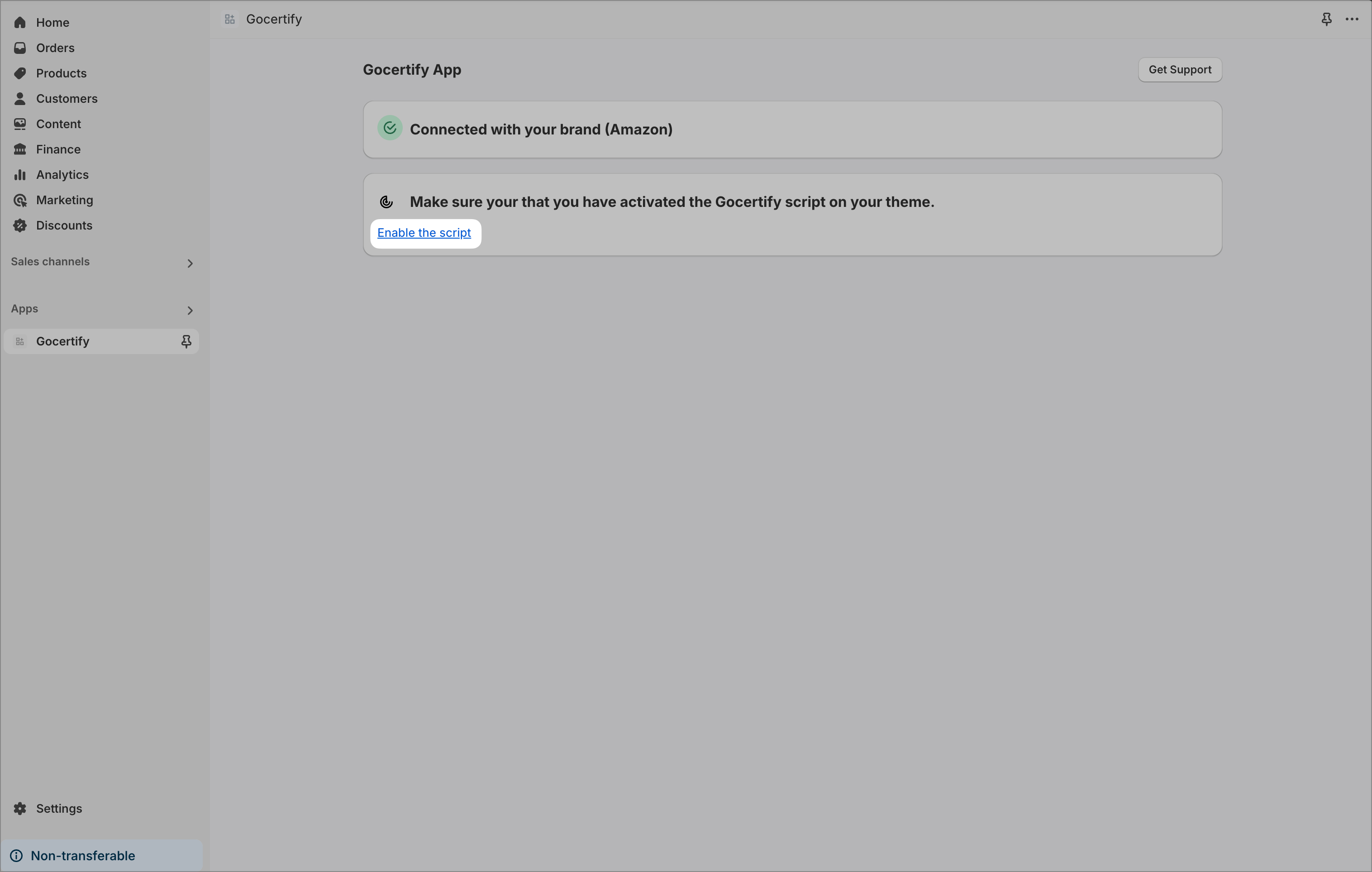
Enable the script. Click this button to navigate to the embed page.6
Enable your embed script
Click the toggle to enable the embed script. The Gocertify head script is now enabled and added to your site.
7
Add on-site messaging
Once you have enabled the embed script, you can use Shopify Blocks to add on-site messaging to your site. See Adding Gocertify Blocks for how to set up each block.
Google Tag Manager
Google Tag Manager
Watch our tutorial video or follow these steps.
1
Add a new tag
Navigate to your Google Tag Manager (GTM) account and select
Add new Tag2
Pick the Custom HTML configuration
Within the tag configuration, select the
Custom HTML option.3
Paste in your Gocertify script
Copy and paste the following script into the HTML tag. Remember to replace
example-company with your actual company name.gocertify-script
4
Trigger to fire on all pages
Within the
Triggers options configure the tag to fire on all pages.Note: The script is just 44kb and well optimised so it won’t slow down your site.
5
Save and Publish
Save your tag as
gocertify and publish your container.Bloomreach Tag Manager
Bloomreach Tag Manager
Prerequisite: The Bloomreach JS SDK must be integrated into your website. The SDK retrieves active tags and executes them after the page loads.
1
Open Tag Manager
In your Bloomreach Engagement project, go to Data & Assets → Tag Manager.
2
Create a new tag
Click + Create new. Skip the preset selection to create a custom tag.
3
Add the Gocertify script
In the Definition section, paste your script into the code editor. Remember to replace
example-company with your actual company name.gocertify-script
4
Configure settings
In the Settings section, set Fire on to fire on all pages so the script loads site-wide.
Note: The script is just 44kb and well optimised so it won’t slow down your site.
5
Save and activate
Save your tag as
gocertify and activate it.Awin Mastertag
Awin Mastertag
Watch our tutorial video to see how it’s done.
1
Navigate to the plugin Store
Select 
Toolbox from your main menu and then under Links and Tools select Plugin Store.2
Activate Plugin
Within the store search for the Gocertify plugin and click
Activate now and confirm your choice.3
View your Plugins
Once activated the final modal will give you the option to
View My Plugins. Select this and you will see that the plugin is activated and the script has been deployed.Validate your installation
Once you’ve added the script to your site, use the built-in validation tool (found in the Integrate on-site settings page) to confirm it’s working:1
Enter your website URL
In the validation section, enter the URL of a page where you’ve installed the script.
2
Run validation
Click validate. The tool will check that the Gocertify script is present and correctly configured.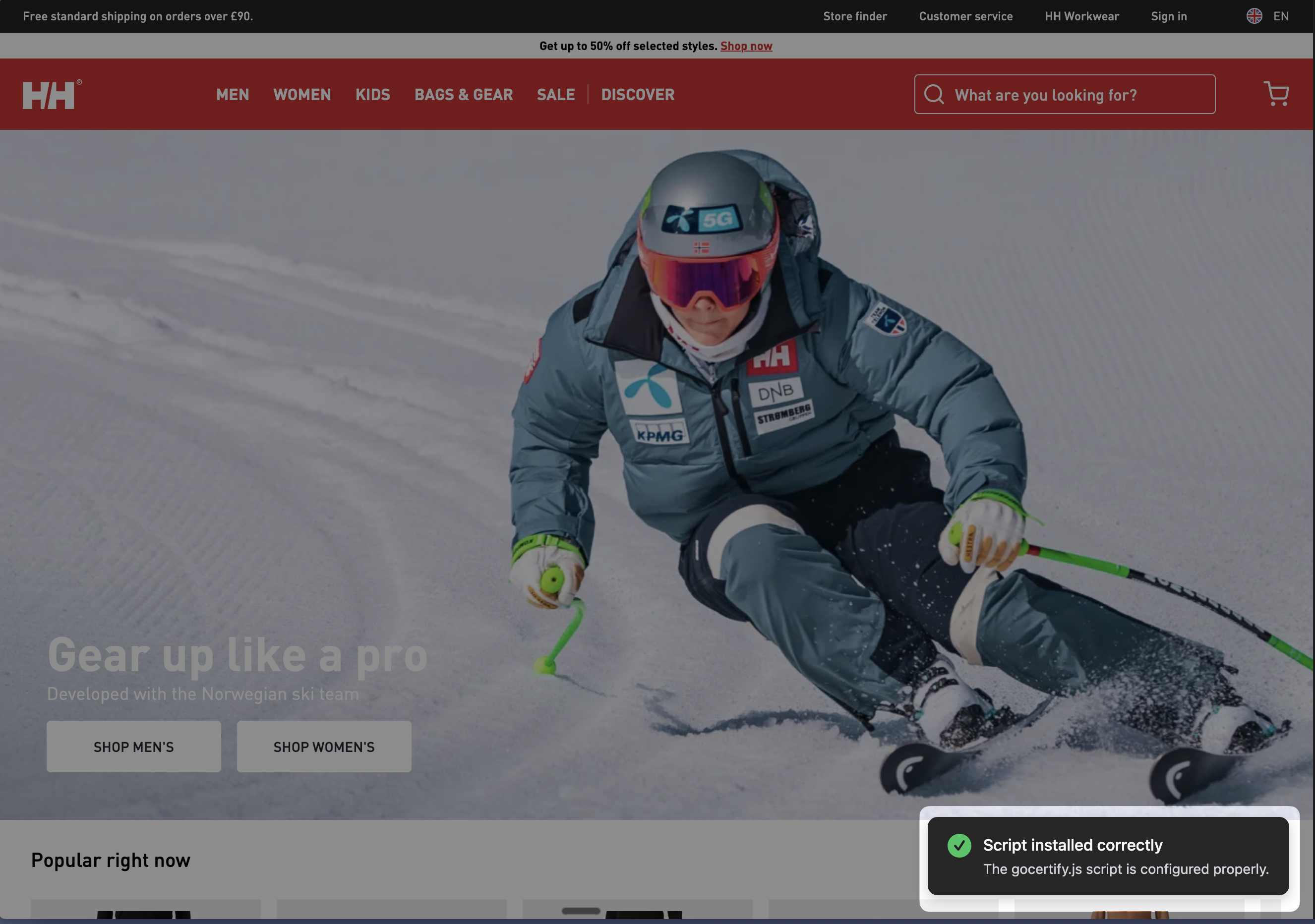
3
Confirm success
A success message confirms everything is working. If validation fails, check that the script was added to the
<head> and that the page has been published.